233-204
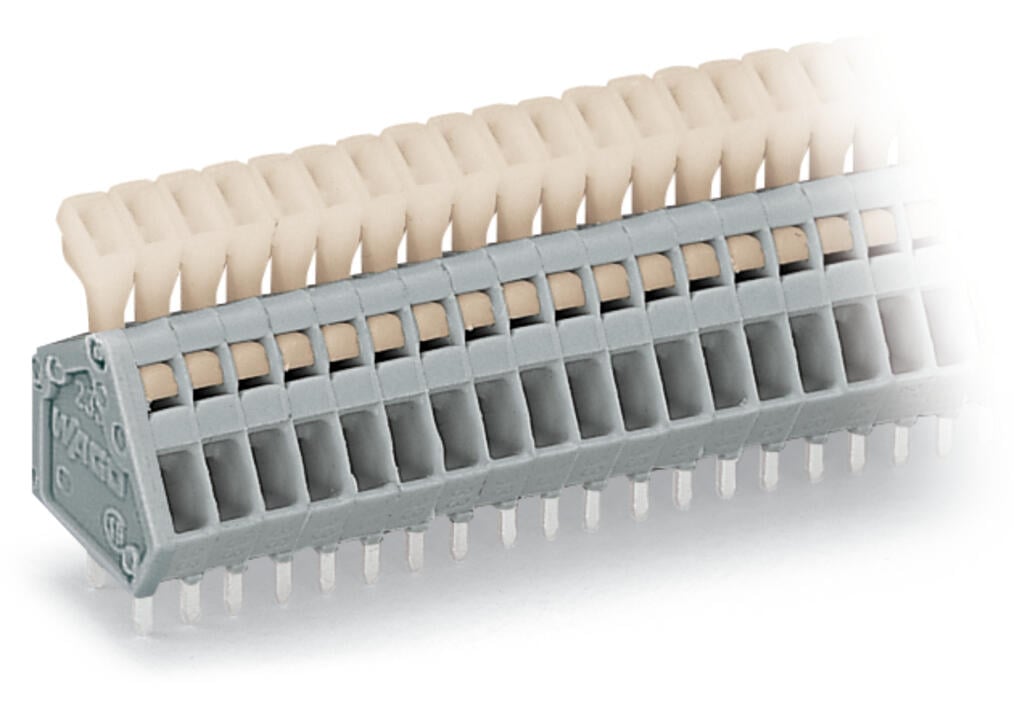
PCB terminal block, 233 Series, 30 °conductor entry to boardConnect conductors quickly and easily with this PCB terminal block (item number 233-204). It is a universal connector that can be used almos...
<h2>PCB terminal block, 233 Series, 30 °conductor entry to board</h2><br/><br/>Connect conductors quickly and easily with this PCB terminal block (item number 233-204). It is a universal connector that can be used almost anywhere, for example, as a pluggable PCB connector, panel feedthrough header, connector for rail-mount terminal blocks, or a floating connector for different mounting methods. This PCB terminal block has a rated voltage of 160 V and can handle currents up to 6 A. Conductors should only be connected to this PCB terminal block if their strip length is between 5 mm and 6 mm. This product features one conductor terminal and utilizes CAGE CLAMP®. Our proven universal connection known as CAGE CLAMP® is the industry standard for connection technology and electrical interconnections. Dimensions: 12.3 x 19.5 x 13.9 mm (width x height x depth). This PCB terminal block is suitable for conductor cross sections ranging from 0.08 mm² to 0.5 mm². It comes with one level and four clamping points for connecting four potentials / 4 poles. The gray housing is made of polyamide (PA66) for insulation, the contacts are made of electrolytic copper (ECu), and the clamping spring is made of chrome-nickel spring steel (CrNi). The contact surface is coated with tin. A push-button is used to operate this PCB terminal block. THT is used to assemble the PCB terminal block. The conductor is designed to be inserted into the board at an angle of 30°.. The solder pins measure 0.5 x 0.75 mm in cross-section and 4 mm in length and are organized over the entire terminal strip (in-line). There are two solder pins per potential.<br/>
| Brand | Wago |
| Lifecycle status | active |