250-315
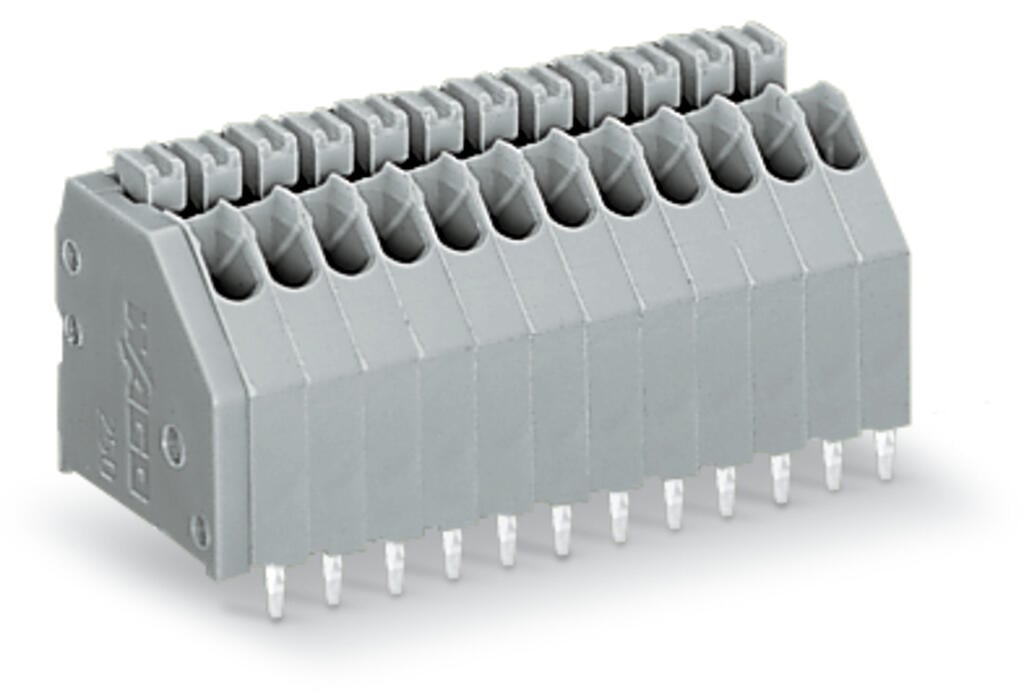
PCB terminal block, 250 Series, solder pin dimensions 0.4 x 0.75 mmOur PCB terminal block (item number 250-315) is the ideal way to connect conductors quickly and securely. You can count on tried and...
<h2>PCB terminal block, 250 Series, solder pin dimensions 0.4 x 0.75 mm</h2><br/><br/>Our PCB terminal block (item number 250-315) is the ideal way to connect conductors quickly and securely. You can count on tried and tested safety with these PCB terminal blocks, perfect for a wide variety of applications when designing your devices. This PCB terminal block has a rated voltage of 160 V and can handle currents up to 4 A. Strip lengths must be between 8.5 mm and 9.5 mm when connecting conductors to this PCB terminal block. This product features one conductor terminal and utilizes Push-in CAGE CLAMP®. Push-in CAGE CLAMP® technology provides a universal connection solution for any type of conductor. It allows both solid and fine-stranded conductors with ferrules to be inserted directly into the clamping point without the need for tools. Dimensions: 39 x 16.7 x 12 mm (width x height x depth). Depending on the conductor type, this PCB terminal block is suitable for conductor cross sections ranging from 0.14 mm² to 0.5 mm². Up to fifteen potentials / fifteen poles can be connected to this terminal strip using fifteen clamping points on one level. The clamping spring is made of a Copper alloy and the gray housing is made of polyamide (PA66) for insulation. The contact surface is coated with tin. A push-button is used to operate this PCB terminal block. THT is used to solder the PCB terminal block. Insert the conductor at a 45° angle.. The solder pins measure 0.4 x 0.75 mm in cross-section and 3.6 mm in length and are organized over the entire terminal strip (in-line). There are one solder pin per potential.<br/>
| Brand | Wago |
| Lifecycle status | active |